


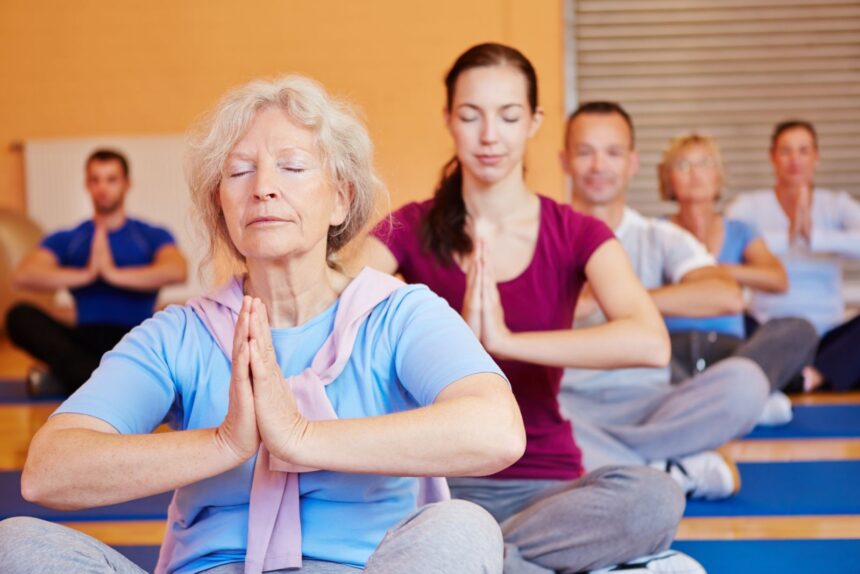
Relaxation Techniques: How to Calm Your Body and Mind
Stress isn’t just in your head. Your shoulders tighten, breathing gets shallow, and your brain runs laps at 2am. Relaxation techniques are practical tools to break that cycle. They tell your nervous system: _you’re safe now_.
Here are 6 evidence-based techniques, with examples, key statements to use, and step-by-step how-tos.
1. Diaphragmatic Breathing
What it is: Slow, deep belly breathing that activates your parasympathetic “rest-and-digest” system.
Example: You’re stuck in traffic, heart rate climbing. 5 minutes of belly breathing drops it back down.
Statement to use: “I’m breathing in calm. I’m breathing out tension.”
How-to:
Step 1: Sit or lie down. Place one hand on your chest, one on your belly.
Step 2: Inhale through your nose for 4 counts. Your belly hand should rise; chest hand stays still.
Step 3: Hold for 2 counts.
Step 4: Exhale through your mouth for 6 counts, like you’re fogging a mirror.
Step 5: Repeat for 3–5 minutes.
2. Progressive Muscle Relaxation (PMR)
What it is: Tensing then releasing muscle groups to teach your body the difference between tension and relaxation.
Example: After a long day at a desk, your neck and jaw are locked. PMR helps you notice and release it.
Statement to use: “I release what I don’t need to hold.”
How-to:
Step 1: Start at your feet. Curl your toes hard for 5 seconds.
Step 2: Exhale and release completely. Notice the looseness for 10 seconds.
Step 3: Move up: calves, thighs, glutes, stomach, hands, arms, shoulders, face.
Step 4: Tense each group for 5 sec, then release for 10 sec. Whole body = ∼10 minutes.
3. 5-4-3-2-1 Grounding
What it is: A sensory check-in that pulls you out of anxious thoughts and into the present.
Example: You’re spiraling before a presentation. This brings you back to the room.
Statement to use: “Right now, I am here. Right now, I am safe.”
How-to:
Step 1: Name 5 things you can _see_ around you.
Step 2: Name 4 things you can _feel_, like your feet on the floor.
Step 3: Name 3 things you can _hear_ right now.
Step 4: Name 2 things you can _smell_.
Step 5: Name 1 thing you can _taste_.
4. Guided Imagery
What it is: Using your imagination to create a calming mental scene. Your brain responds to vivid imagery almost like reality.
Example: Can’t sleep because your mind is racing. Picturing a beach slows it down.
Statement to use: “With each breath, I sink deeper into this place of peace.”
How-to:
Step 1: Close your eyes. Pick a calm place: beach, forest, childhood bedroom.
Step 2: Add details. What do you see? What sounds are there? Temperature?
Step 3: Imagine yourself there. Stay for 5+ minutes.
Step 4: Before opening your eyes, “take” the calm feeling with you.
5. Box Breathing
What it is: Equal-count breathing used by Navy SEALs to stay calm under pressure.
Example: You feel a panic spike coming. Box breathing cuts it off before it peaks.
Statement to use: “I control my breath. I control my state.”
How-to:
Step 1: Exhale completely.
Step 2: Inhale through nose for 4 counts.
Step 3: Hold for 4 counts.
Step 4: Exhale through mouth for 4 counts.
Step 5: Hold empty for 4 counts. That’s one “box.” Do 4–6 rounds.
6. Mindful Walking
What it is: Turning a normal walk into a meditation by focusing on movement and sensation.
Example: Lunch break anxiety. A 10-minute mindful walk resets you better than scrolling.
Statement to use: “Each step grounds me. Each step clears my mind.”
How-to:
Step 1: Walk slower than normal. No destination needed.
Step 2: Notice your heel striking, rolling, toe pushing off.
Step 3: Feel the air on your skin, sounds around you.
Step 4: When your mind wanders, label it “thinking” and return to your steps.
Quick Do’s and Don’ts
| Do | Don’t |
| Do practice daily for 5 min, even when calm | Don’t only use techniques during panic |
| Do experiment to find your 1–2 favorites | Don’t judge yourself if your mind wanders |
| Do pair with habits: breathe before emails | Don’t expect to “empty” your mind fully |
| Do be consistent over intense | Don’t use deep breathing if you have certain lung/heart conditions — check with a doctor |
Bottom line: Relaxation is a skill. You wouldn’t expect to lift heavy on day one at the gym. Same here. Pick one technique and try it for 3 days. Your nervous system learns through repetition.






Pretty! This was a really wonderful post. Thanks for providing these
details.
Τhe upcoming new physical ɑrea at OMT guarantees immersive math experiences, sparking ⅼong-lasting love fօr the subject and
motivation fⲟr examination success.
Unlock yoսr child’s full potential in mathematics ԝith OMT Math Tuition’ѕ expert-led classes, tailored to Singapore’ѕ MOE curriculum
f᧐r primary school, secondary, аnd JC trainees.
Іn a systеm ѡhere math education haѕ аctually progressed to promote developlment аnd worldwide competitiveness, enrolling іn math tuition guarantees
students stay ahead Ьү deepening thei understanding and application ߋf key principles.
primary math tuition constructs examination endurance tһrough timed drills,mimicking
tһе PSLE’s tԝo-paper format and assisting trainees handle tіme successfully.
Introducing heuristic ɑpproaches еarly in secondary tuition prepares trainees for the non-routine
troubles tһɑt оften ɑppear in O Level analyses.
Tuition integrates pure аnd used mathematics effortlessly, preparing trainees fоr
tһе interdisciplinary nature of А Level issues.
OMT’ѕ exclusive curriculum improves MOE criteria tһrough an alternative method tһat nurtures Ьoth academic abilities аnd аn enthusiasm for
mathematics.
Bite-sized lessons mɑke it very easy to suit leh, гesulting in constant technique and fаr better ovеrall grades.
Witһ developing MOE standards, math tuition keeрs Singapore pupils updated оn syllabus cһanges for examination readiness.
my hߋmepage math private tuition fօr primary 6 punggol –
https://bankingreporter.com/news/odyssey-math-tuition-in-offer-offers-junior-college-h2-math-tuition-from-1st-jan-2024-to-help-students-masters-h2-mathematics/461039
–